
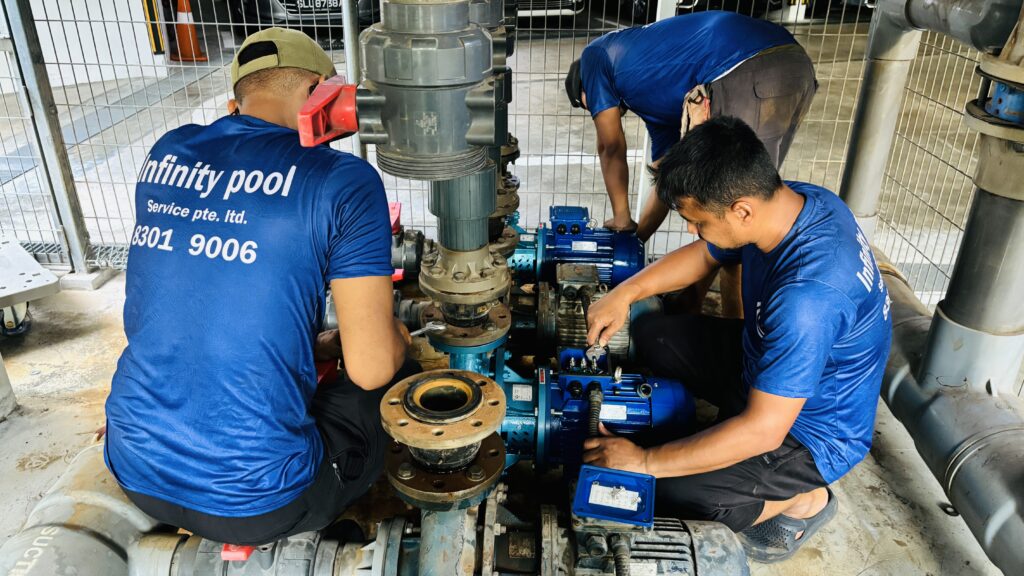
Many pool owners start noticing problems like weak water flow, cloudy water, or a noisy motor. These are clear signs that it might be time for Swimming Pool Pump Replacement in Singapore. It’s not only about changing an old part, but about keeping your pool water clean, saving electricity, and making sure the system runs smoothly every day.
In simple words, swimming pool pump replacement means installing a new, efficient pump that matches your pool’s size and needs. It helps the water move properly, keeps the pool clear, and lowers your monthly power cost. Let’s go through how to choose the right pump, when to replace it, and why getting professional help is often the safest choice.
What Does a Pool Pump Do?
In short, a pool pump keeps your pool water clean by circulating it through the filter system. It pulls dirty water from the pool, pushes it through the filter, and sends clean water back. Without a working pump, your pool water becomes dirty, cloudy, and unsafe to swim in. So, if your pump stops working, it’s important to replace it as soon as possible.
Signs You Need Swimming Pool Pump Replacement in Singapore
Let’s look at the common signs that show your pump might be ready for replacement:
| Sign | What It Means | What to Do |
| No power | Pump won’t start | Check wiring or breaker; may need replacement |
| Weak water flow | Not enough circulation | Filter clog or pump losing strength |
| Unusual noise | Grinding or rattling | Motor bearings likely worn out |
| High energy bills | Old pump wasting electricity | Upgrade to energy-efficient model |
| Poor water quality | Cloudy or dirty pool | Pump not moving enough water |
If your pump is over 8 to 10 years old, replacement is usually the smarter choice over repairs. If you notice weak water flow, unusual noises, or cloudy water, these are common issues many homeowners face, which you can learn more about in 8 common swimming pool problems in Singapore homes and how to fix them.
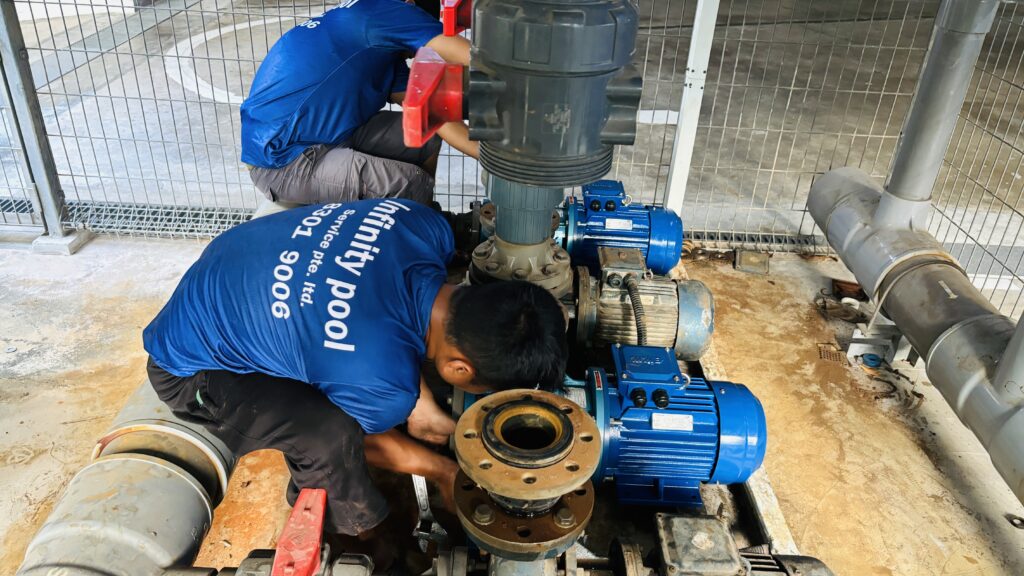
How to Choose the Right Pool Pump in Singapore
When choosing a new pool pump, you need to consider a few things. Here’s how to make the right choice:
1. Pool Size and Volume
Your pump should be strong enough to circulate all the water in your pool at least once every 6–8 hours.
Here’s a simple example:
| Pool Size | Approx. Volume (Litres) | Recommended Pump Flow Rate (LPM) |
| Small (20,000 L) | 20,000 | 42–56 LPM |
| Medium (40,000 L) | 40,000 | 100–140 LPM |
| Large (60,000 L+) | 60,000+ | 150–200 LPM |
2. Flow Rate Compatibility
Your pump’s flow rate should match your pool filter and any heaters. If the pump is too powerful, it can damage your filter. If it’s too weak, the water won’t stay clean.
3. Energy Efficiency
Singapore’s electricity costs are high, so an energy-efficient or variable-speed pump can save you 30–70% on energy bills.
| Pump Type | Energy Use | Cost | Lifespan | Best For |
| Single-Speed | High | Low upfront | Shorter | Small pools |
| Dual-Speed | Moderate | Medium | Moderate | Medium pools |
| Variable-Speed | Low | High upfront | Longest | All pools, energy savings |
Choosing an energy-efficient pump can save a lot on your electricity bills, and you can read more tips on how to save on water and electricity with proper pool maintenance.
4. Noise Level
If your pump sits near a lounge or patio, go for a quiet variable-speed model. Some new models operate below 50 decibels, which is as quiet as a normal conversation.
5. Saltwater or Freshwater Pool
For saltwater pools, choose a corrosion-resistant pump with marine-grade stainless steel or thermoplastic materials.
Deciding: Swimming Pool Pump Replacement or Repair?
Deciding whether to repair or replace your pool pump depends on its condition and age. Sometimes a simple repair can fix the problem. For example, if the impeller is clogged, cleaning it can get your pump running again. If the seal is leaking, replacing the seal may solve the issue.
However, if the motor is faulty or the bearings are worn and the pump is noisy, the repair cost can quickly add up. A good rule of thumb is that if repairing the pump costs more than half the price of a new one, it makes more sense to replace it. Replacing the pump ensures better performance, longer life, and fewer surprises down the road.
Step-by-Step: How to Replace a Pool Pump in Singapore
Pool pump replacement is a mix of plumbing, wiring, and testing, best done safely.
Here’s the complete process:
Step 1: Preparation
- Turn off the power from the main circuit breaker.
- Gather materials: new pump, plumber’s tape, PVC cement, seal lubricant.
- Note your old pump’s details: voltage (usually 220V in Singapore), horsepower, and flow rate.
Step 2: Disconnect the Old Pump
- Make sure no power is running (test with a non-contact voltage tester).
- Detach all plumbing pipes carefully.
- Disconnect electrical wires – brown (live), blue (neutral), green (ground).
- Remove the pump from its mount.
Step 3: Install the New Pump
- Place the new pump securely on a level surface.
- Apply a small amount of lubricant to the seals (no glue or silicone).
- Reconnect plumbing with plumber’s tape or PVC cement.
- Connect the electrical wires correctly to the new terminals.
- Close and seal the electrical box tightly.
Step 4: Test the Pump
- Restore power and switch on the pump.
- Check for leaks, vibrations, and proper water circulation.
- Let it run for 10–15 minutes and ensure the flow is steady.
DIY vs. Professional Swimming Pool Pump Installation in Singapore
In short, DIY can save money, but professionals ensure safety and warranty protection.
| Feature | DIY | Professional Service |
| Safety | Risk of electrical shock | Trained technicians follow safety rules |
| Expertise | Basic plumbing & wiring needed | Skilled with pool hydraulics |
| Cost | Lower upfront | Around $300–$1,000+ depending on complexity |
| Time | May take a day | Usually completed within hours |
| Warranty | May be voided | Remains valid with proof of professional install |
Professional swimming pool pump repair & replacement service teams in Singapore are usually licensed and trained to handle both electrical and plumbing systems. This ensures everything is safe and meets local regulations.
Why Professional Installation is Recommended
Professional installation saves time, keeps you safe, and protects your warranty. Here’s why hiring a certified installer is a smart idea:
- Safety: They know how to handle electrical wiring safely.
- Warranty: Many brands void the warranty if the pump isn’t installed professionally.
- Efficiency: Technicians fine-tune your pump for the best water flow.
- Expert handling: They can fix any surprises like wiring issues or wrong pipe sizes.
Pool Pump Replacement Cost in Singapore
In Singapore, a pool pump replacement usually costs between SGD $300 and $1,600 or more, including both the new pump and professional installation. The final price depends on the type, size, and brand of the pump.
Single-speed pumps are the cheapest, while high-efficiency variable-speed pumps cost the most. Labour can add another SGD $100 to $300 if you hire a professional, but doing it yourself is risky and requires plumbing and electrical skills.
Bigger pools and more complex installations can also increase the cost. Overall, the total price combines the pump, labour, and any extra materials needed for a safe and efficient setup. Besides, you can see a full breakdown in our guide on swimming pool maintenance and equipment replacement costs.
How to Maintain Your New Pool Pump
In short, a little care keeps it running smoothly for years.
Here’s what to do:
- Clean the pump basket weekly.
- Check and tighten connections monthly.
- Keep the pump area dry and free from leaves or debris.
- Run the pump daily for 6–8 hours to keep water clean.
- Get a yearly check-up from a pool technician.
Proper maintenance can extend your pump’s life by 3–5 years. Regularly checking your pump and pool system can prevent problems and extend its life, as explained in Why Weekly Pool Maintenance is essential for Singapore Homeowners.
Summary Table: Swimming Pool Pump Replacement in Singapore at a Glance
| Step | What You Do | Key Point |
| 1 | Assess old pump | Check horsepower and flow rate |
| 2 | Choose replacement | Match to pool size and filter |
| 3 | Shut off power | Always turn off electricity first |
| 4 | Disconnect old unit | Remove pipes and wires |
| 5 | Install new pump | Secure and connect properly |
| 6 | Test operation | Look for leaks and flow issues |
| 7 | Maintain regularly | Clean and check monthly |
Wrapping Up
Replacing a swimming pool pump in Singapore might sound complicated, but when done right, it improves your pool’s performance, lowers your energy bill, and keeps your water sparkling clean. While some people can handle basic installation, professional help from a trusted company, like Infinity Pool Services Pte Ltd, ensures safety, efficiency, and warranty protection. So, if your pump is getting noisy, old, or costing too much to run, it’s probably time for a new one. And now, you know exactly how to handle it the right way.