
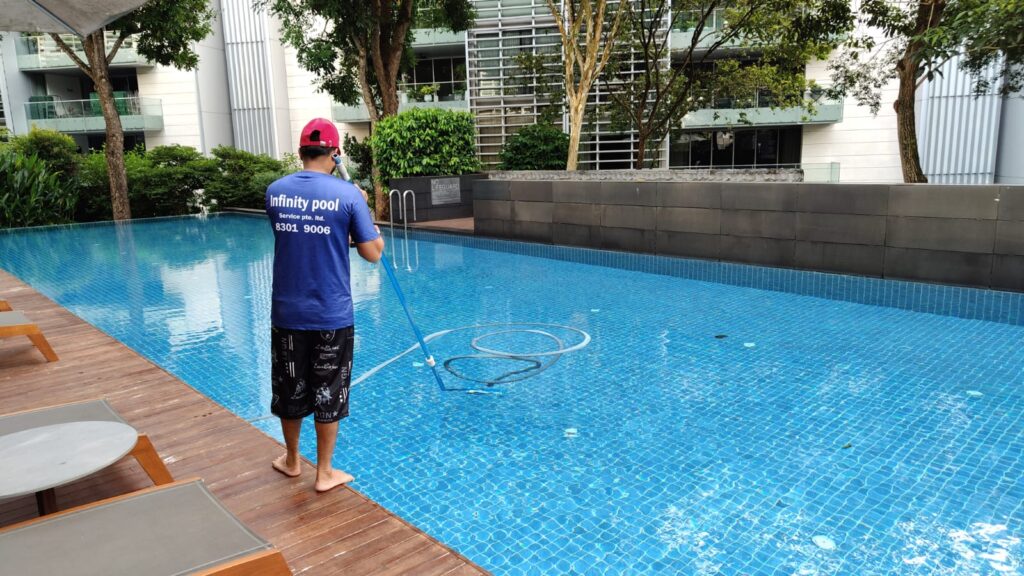
Maintaining a swimming pool in Singapore can be tricky. The tropical weather, rain, and humidity mean your pool filter works hard to keep your water clean. That’s why the necessity of a professional Swimming Pool Filter Servicing in Singapore is so important. A well-serviced filter keeps your water clear, safe, and healthy while saving energy and chemicals.
If your pool water looks cloudy, has strange smells, or your pump struggles, it’s a clear sign your filter needs attention. Regular servicing and timely replacement make your pool easy to enjoy and reduce costly repairs. Keep reading, and we’ll show you simple steps, expert tips, and everything you need to know to keep your pool running all year perfectly.
Why Swimming Pool Filter Servicing in Singapore is Important
Your pool filter does the hard work of removing dirt, debris, oils, and bacteria from the water. If it’s not serviced regularly:
- Water becomes dirty and unsafe.
- Pool circulation slows down.
- The pool pump works harder, using more electricity.
- Chemicals are used faster, increasing your costs.
- Equipment can get damaged sooner.
Regular servicing and replacement keep your water clean, save energy, and make your pool equipment last longer.
Types of Pool Filters and How They Work
There are three main types of filters used in Singapore pools:
| Filter Type | How It Works | Where It’s Used | Maintenance Frequency |
| Sand Filter | Water passes through sand to trap dirt | Hotels, gyms, clubs | Backwash every 4-6 weeks |
| Cartridge Filter | Pleated fabric traps debris | Home pools, small pools | Clean every 4-6 months |
| Diatomaceous Earth (DE) Filter | Fine powder captures tiny particles | Premium pools, large setups | Clean every 4-6 weeks and add DE powder |
Each filter type needs different care. Knowing your filter type is the first step in keeping your pool water crystal clear.
How Often Should You Service Your Pool Filter
In Singapore, the tropical climate can increase debris, so regular checks are important:
- Sand Filters: Backwash every 4-6 weeks or when pressure rises 8-10 PSI.
- Cartridge Filters: Clean every 4-6 months or sooner if the water looks cloudy.
- DE Filters: Clean every 4-6 weeks and add DE powder each time.
- High Pressure: A high reading on the filter gauge means the filter is clogged.
- Cloudy Water: Indicates the filter is dirty or malfunctioning.
Regular servicing prevents bigger problems and keeps your water safe.
Filter Type Pros and Cons
| Filter Type | Pros | Cons |
| Sand | Low cost, easy to maintain, suitable for large pools | Less effective for tiny particles |
| Cartridge | Low energy use, high efficiency, easy cleaning | Needs periodic replacement |
| DE | Best filtration, captures the smallest particles | Higher maintenance, more expensive |
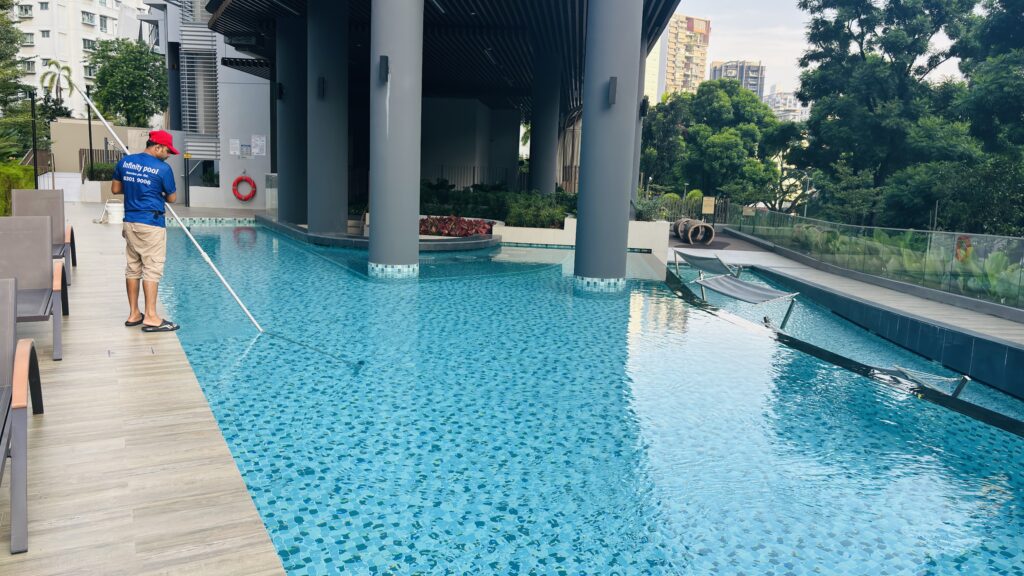
Step-by-Step Pool Filter Cleaning Like a Pro
Here’s how you can clean your filters properly:
Sand and DE Filters
- Turn off the pump – Never start cleaning with the pump running. Safety first.
- Set the valve to backwash or waste – This reverses the water flow to push dirt out.
- Run the pump until the water is clear – Keep an eye on the sight glass. Clear water means most debris is gone.
- Turn off the pump and reset the valve to filter – Make sure the valve is back in the correct position.
- For DE filters, add fresh DE powder – Always use the recommended amount to ensure fine particles are trapped. This keeps the water crystal clear.
Pro tip: A professional also checks the pressure gauge before and after cleaning to confirm the filter is working efficiently.
Cartridge Filters
- Turn off the pump and open the filter tank – Always make sure no water is running.
- Remove the cartridge carefully – Avoid damaging the pleats.
- Rinse thoroughly with a hose – Spray all sides until no dirt is left.
- Soak in filter cleaner solution for deep cleaning – This removes oils and stubborn dirt that hosing can’t get.
- Inspect for wear and replace if needed – Cartridges usually last 1-2 years, but a pro checks each time.
Pro tip: Professionals also check for small tears, cracks, or hardened debris in the pleats, which can reduce efficiency.
General Inspection
- Check O-rings, seals, and filter tank – Look for cracks, damage, or leaks.
- Lubricate O-rings with pool-safe lubricant – Keeps seals flexible and prevents water leaks.
- Turn the pump back on and monitor pressure – Make sure the gauge shows normal pressure, which confirms everything is clean and flowing well.
Pro tip: Experts also inspect the pipes, valves, and pump connections to prevent future problems.
Other Essential Pool Maintenance in Singapore
- Skim debris daily: Leaves and dirt can clog the filter.
- Brush and vacuum weekly: Prevent algae buildup on walls and floor.
- Test water chemicals weekly: Maintain pH, chlorine, and alkalinity levels.
- Inspect equipment: Check pumps, heaters, and valves for wear.
- Consider professional service: Professionals, like Infinity Pool Services Pte Ltd, can handle full maintenance, including chemical balancing and deep pool cleaning.
Signs Your Pool Filter Needs Replacement
If your filter shows these signs, it may need replacing:
- Water tastes metallic or stale.
- Strange odours like chlorine or musty smells.
- Slow water flow even after backwashing.
- Cloudy water or visible debris.
Replacement schedule:
- Cartridge filters: every 1-2 years
- Sand/Glass filters: every 3-5 years
- DE filters: as needed, usually yearly for powder replacement.
Common Filter Problems and Solutions
| Problem | Cause | Solution |
| Low water flow | Clogged filter | Clean or backwash filter |
| Cloudy water | Malfunction or clogged filter | Inspect, clean, or replace the filter |
| High pressure | Dirty or worn filter | Backwash, clean, or replace the filter |
Choosing the Right Swimming Pool Filter
Here’s what to consider:
- Pool size: Larger pools need stronger filters.
- Pump compatibility: Match the filter with your pump flow rate.
- Maintenance willingness: Some filters need more work than others.
- Filtration rate: A Higher rate means faster cleaning.
- Budget: Consider initial and ongoing costs; sometimes spending a bit more saves money in the long run.
Professional Swimming Pool Filter Servicing in Singapore
While DIY maintenance works for many, professional Swimming Pool Filter servicing is recommended for:
- Complex systems
- Large commercial pools
- Older or damaged filters
A professional team like Infinity Pool Services Pte Ltd provides:
- On-site inspection and clear quotes
- Certified technicians
- Swimming pool cleaning, backwashing, and replacement
- Chemical balancing
- Preventive maintenance for long-term equipment health.
Filter System Replacement Cost in Singapore
Factors affecting cost: filter size, type, damage, algae buildup, and complexity of installation.
| Service | Price Range (SGD) |
| Servicing (cleaning & tune-up) | $100 – $300 |
| Replacement (new filter, parts & labour) | $400 – $1,500 |
Benefits of Professional Pool Filter Servicing
Infinity Pool Services Pte Ltd ensures your pool runs smoothly with skilled technicians, fast solutions, and all-time support.
- Cleaner, healthier water
- Reduced energy and chemical costs
- Prolonged equipment life
- Peace of mind with expert care.
Wrapping Up
Regular pool filter servicing is essential in Singapore’s tropical climate. Understanding your filter type, following proper cleaning schedules, and recognising warning signs can save you time, money, and hassle. While DIY cleaning works, professional swimming pool filter servicing in Singapore ensures thorough maintenance and prolongs your pool equipment’s life. For expert swimming pool filter servicing and replacement in Singapore, reach out to Infinity Pool Services Pte Ltd. We provide on-site visits, upfront quotes, and a certified team to make sure your pool water stays clean, safe, and sparkling all year round.
FAQs
No, you don’t need to run it all the time. Running it 6-8 hours a day is enough for most pools. Too much running wastes energy and wears out the pump faster.
If you skip backwashing, the sand gets clogged, and the water flow slows down. The pump works harder, and water may become cloudy. Regular backwashing keeps your pool clean and saves energy.
Check the pressure gauge after cleaning. If pressure rises quickly, you may need to add more DE powder. A proper amount ensures tiny dirt and debris are trapped.
It’s better to wait for calm weather. Cleaning during rain can add extra debris to the pool. Professionals usually wait to ensure proper cleaning and clear water.
Keep chemicals balanced, skim debris daily, and clean filters regularly. Algae grow when water circulation is poor or when the chemicals are low. Clean filters help prevent it naturally.
For most pools, it takes 1-3 hours, depending on filter type and condition. Sand and DE filters usually take longer than cartridge filters. Professionals also inspect the whole system.
It’s not common, but possible with proper plumbing. Mixing filters may need extra fittings and adjustments. A pro can check compatibility and install it safely.
Smell can come from unbalanced chemicals or debris in the water, not just the filter. Test and adjust chlorine, pH, and alkalinity. A clean filter alone may not remove all odours.
Check the pressure gauge at least once a week. A sudden rise shows the filter is clogged or needs cleaning. Watching pressure prevents bigger problems and keeps the water clear.
Yes, curious kids or pets can bump valves, hoses, or O-rings. Keep the area secure and teach them not to play near the filter. This helps avoid leaks or broken parts. |