
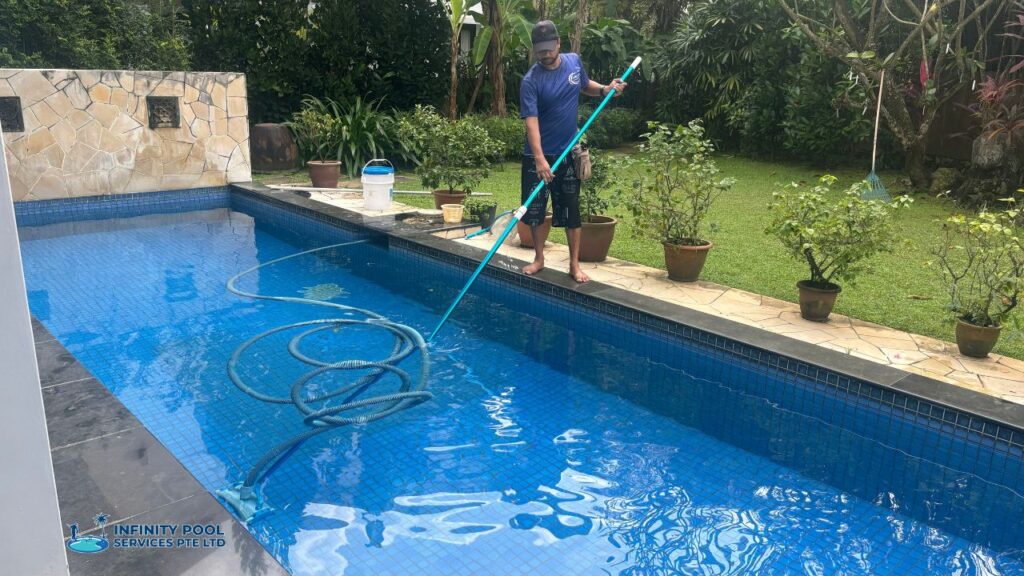
You open your pool on a sunny morning, but the water looks cloudy. Leaves and insects float on top. The walls feel slimy, and the pump sounds strange. That’s when you realise you need to know how to do swimming pool maintenance for private homes in Singapore.
In Singapore’s hot and humid climate, rain, fallen leaves, and fast algae growth can quickly turn a clean pool into a messy one. Knowing the right steps for daily, weekly, and monthly care helps you keep your pool safe, clear and ready to swim anytime. Let’s get into the details.
Here’s How to Do Swimming Pool Maintenance for Private Homes in Singapore
Keeping a private pool clean in Singapore takes regular care. With the right routine, you can stop algae, debris and chemical problems before they start. Let’s show you the overall maintenance process.
1. Daily Swimming Pool Maintenance Tasks
Taking care of your pool every day keeps it clean and safe. Small daily steps make bigger problems much easier to avoid.
- Skim the Surface – Remove leaves, insects, and debris floating on the water. Doing this daily stops the skimmer from clogging and keeps the water looking clear.
- Check Water Level – Water evaporates quickly in Singapore’s hot weather. Make sure the water level is above the skimmer opening and top up if needed.
- Visual Inspection – Walk around the pool and check the walls, steps, and the water. Look for green patches, foam, or debris. Spotting problems early saves time and money.
- Check Equipment Sounds – Listen to the pump and filtration system. Strange sounds or leaks can indicate an issue before it becomes serious.
- Quick Chemical Check (Optional) – While a full chemical test is weekly, you can quickly glance at your test kit strips to make sure chlorine or pH is not very low or high.
- Remove Floating Items – Toys, towels, or floating objects should be taken out to prevent them from blocking water flow or staining the pool.
2. Weekly Swimming Pool Maintenance Routine
Doing a few things every week keeps your pool clear and healthy. A little effort for pool maintenance each week stops big problems later.
- Skim and Clean – Remove all leaves, bugs, and debris from the water. Empty the skimmer baskets so water flows freely.
- Brush Walls, Tiles, and Steps – Use a pool brush to scrub walls, corners, and steps. This stops algae and dirt from sticking.
- Vacuum the Pool Floor – Use a manual or automatic vacuum to clean the floor. This keeps water clear and smooth.
- Test Water Chemistry – Check pH (7.2–7.6) and chlorine (1–4 ppm) with a test kit. Add chemicals if needed to balance water.
- Clean or Backwash Filters – Wash the filter or backwash it to remove trapped dirt. This helps water stay clear.
- Check Pool Equipment – Look at pumps, filters, and chlorinators. Fix any leaks, broken parts, or unusual sounds.
3. Monthly Swimming Pool Maintenance Tasks
Once a month, do a deeper check and arrange for a Swimming Pool Cleaning Service in Singapore. This keeps your pool strong and safe.
- Deep Cleaning – Brush and vacuum the walls, floor, and tiles thoroughly. Remove stubborn dirt.
- Shock Treatment – Add a chlorine shock dose to kill bacteria and algae.
- Inspect Equipment – Lubricate o-rings, check pump pressure, and look at heaters if you have them.
- Check Water Hardness and Alkalinity – Test these levels to stop scaling or corrosion. Adjust with chemicals if needed.
4. Seasonal or Occasional Tasks
Some tasks don’t need to be done every day or week, but doing them at the right time keeps your pool safe and clean. These jobs help prevent bigger problems caused by weather, dirt, or long-term buildup.
- Rainy Season Care – Singapore rain can lower pH and chlorine in your pool. Test your water more often after heavy rain and adjust chemicals to keep the water safe and clear.
- Pool Cover Maintenance – A pool cover keeps leaves, dirt, and rainwater out. Clean it regularly and check for holes or mould. A good cover helps protect your pool and reduces evaporation.
- Tile and Grout Cleaning – Tropical humidity can leave calcium and grime on your tiles and grout. Scrub walls and edges monthly or whenever buildup appears to keep surfaces smooth and safe.
- Drain and Refill – Sometimes the water gets very dirty, or chemicals become unbalanced. Partially draining and refilling the pool helps restore clean water and proper chemical balance.
5. Singapore-Specific Tips for Pool Owners
Pools in Singapore face unique challenges like heat, humidity and heavy rain. These tips help keep your water clear and safe all year.
- Fight Humidity and Rain – Check chemical levels more often during humid or rainy periods. Algae grows faster in warm, wet conditions, so don’t skip tests.
- Remove Oils and Sunscreen – Skin oils and sunscreen float on water and make it cloudy. Drop a tennis ball in the skimmer; it absorbs the oils naturally.
- Pool Heating and Cooling – Optional, but it keeps the water at a comfortable temperature. A small heater or cooler can make swimming more enjoyable year-round.
- Pest Control – Standing water attracts mosquitoes and insects. Keep water circulating, cover the pool when not in use, and clean skimmers and drains to prevent breeding.
- Use a Pool Cover – Covers reduce debris falling in and slow down evaporation. This saves water and helps maintain stable chemical levels.
Swimming Pool Maintenance Checklist
| Task | Frequency | Chemicals / Tools |
Notes |
| Skim the surface and remove debris | Daily | Leaf net or skimmer | Prevents clogging and keeps water clean |
| Check the water level | Daily | Hose/bucket | Top up the water if it falls below the skimmer opening. |
| Visual inspection | Daily | None | Look for algae, foam, or debris |
| Brush walls, tiles, steps | Weekly | Pool brush | Prevents algae and grime build-up |
| Vacuum pool floor | Weekly | Manual or automatic vacuum | Removes dirt and keeps the pool clean |
| Test water chemistry | Weekly | pH & chlorine test kit | pH 7.2–7.6, chlorine 1–4 ppm; adjust if needed |
| Filter cleaning/backwash | Weekly | Filter tools/backwash system | Maintains clear water and circulation |
| Equipment check | Weekly | Inspection tools | Check pumps, filters, and chlorinators for leaks or wear |
| Deep cleaning | Monthly | Brush, vacuum, cleaner | Thoroughly clean walls, floor, tiles |
| Shock treatment | Monthly | Chlorine shock | Kills bacteria and algae |
| Inspect equipment & lubricate | Monthly | Tools, lubricants | Check o-rings, pump pressure, heaters |
| Check water hardness & alkalinity | Monthly | Test kit | Prevents scaling and corrosion |
| Pool cover maintenance | Seasonal / as needed | Cleaning tools | Keeps debris and mould out |
| Drain & refill | Occasional | Hoses, buckets | For very dirty water or a chemical imbalance |
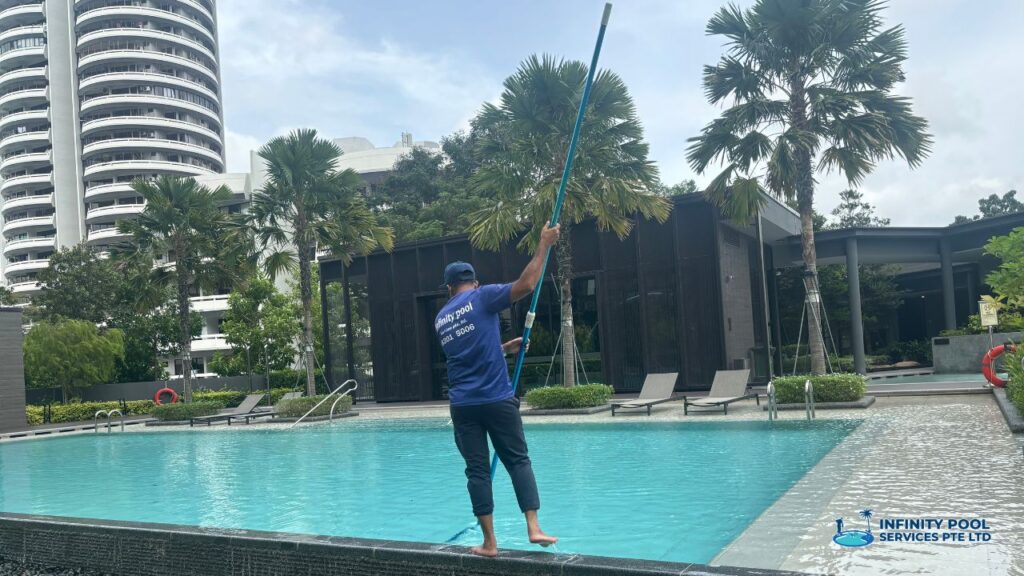
Step-by-Step Swimming Pool Maintenance Guides
Keeping your pool clean is easier when you follow simple steps. These guides show exactly how to test water, brush tiles, and vacuum the pool safely.
How to Test pH and Chlorine
- Take a water sample from elbow depth.
- Dip a test strip or liquid kit into the water.
- Wait for the colour to change.
- Compare the colour with the colour comparison chart that comes with your pool test kit.
- Add chemicals to adjust pH or chlorine if needed.
How to Brush Pool Tiles
- Start brushing at the waterline.
- Use a firm pool brush.
- Brush in small circles over each section.
- Brush walls, steps, and corners carefully.
- Vacuum the pool after brushing.
How to Vacuum the Pool
- Connect the vacuum head to the pole and hose.
- Attach the hose to the skimmer or suction port.
- Move the vacuum slowly across the pool in overlapping lines.
- Empty the vacuum bag or container when finished.
Singapore-Specific Tips
- Heavy rain affects chemicals, so test more often.
- Use a tennis ball in the skimmer to absorb oils and sunscreen.
- Consider pool heating or cooling for comfort.
- Watch for mosquitoes and pests.
- Use a pool cover to reduce debris and evaporation.
Ideal Chemical Levels for Singapore Pools
For private pools in Singapore, keeping the right chemical levels is very important. The pH should be between 7.2 and 7.6 to keep the water safe and comfortable for swimming.
Free chlorine should be 1 to 4 parts per million to kill bacteria and prevent algae. Total alkalinity should stay between 80 and 120 ppm to help the water stay balanced and protect your pool surfaces. Checking and adjusting these levels regularly keeps your pool clean, clear, and safe.
DIY vs Professional Pool Maintenance Care
Some Pool tasks are easy to do yourself, while others need a Swimming Pool Maintenance Contractor in Singapore. Knowing which to handle on your own and which to hire saves time, money, and keeps your pool safe.
| Task | DIY | Professional |
| Skimming, brushing, vacuuming | Yes, do it weekly | Usually optional |
| Chemical testing | Yes, simple tests | Yes, for complex adjustments |
| Filter cleaning | Yes, regular cleaning | Yes, for deep cleaning or replacement |
| Equipment inspection | No | Yes |
| Green pool recovery | No | Yes |
| Plumbing or pump repairs | No | Yes |
Tip: Doing simple DIY tasks weekly and hiring a professional pool care partners, Like Infinity Pool Services Pte Ltd, once a month keeps your pool clean, safe, and crystal clear.
| Contact us today at +65 8301 9006 to book a free consultation. Let our team take care of your pool so you can enjoy it worry-free. |
Common Pitfalls to Avoid in Pool Maintenance
Owning a pool is fun, but small pool maintenance mistakes can become big problems. Here are the most common pitfalls:
- Skipping filter cleaning leads to cloudy water and poor circulation.
- Having the wrong chemical balance can irritate skin and damage pool surfaces.
- Ignoring leaks or broken pumps can cause costly repairs.
- Overlooking tropical issues like algae growth and calcium buildup can make cleaning harder.
Cost Considerations and Budgeting Regarding Pool Maintenance
It’s important to plan your pool maintenance costs. Knowing what to expect helps you avoid surprises.
- Chemicals – Chlorine, pH adjusters, and algaecide usually cost about SGD 50–150 per month.
- Equipment maintenance – Pumps, filters, or other parts may need repair or replacement occasionally.
- Professional service – Hiring a contractor can cost between SGD 150 and 800 per month, depending on pool size and service complexity.
Wrapping Up
So, to sum it up, knowing how to do swimming pool maintenance for private homes makes pool ownership much easier. Do small tasks every day or week, check chemicals, and get professional help when needed. This keeps your water clean, safe, and ready to swim anytime. A simple routine now saves big problems and costs later.
FAQs
You should check your pool water at least once a week. If it rains heavily or the pool is used a lot, check it more often. This keeps chemicals balanced and water clear.
Yes, regular bleach can be used carefully. Make sure it does not have extra scents or additives. Measure carefully to keep chlorine in the safe range of 1 to 4 ppm.
No, always wait after adding chlorine or pH adjusters. Give it a few hours and retest the water before swimming. This keeps your skin and eyes safe.
Daily skimming takes 5–10 minutes. Weekly brushing and vacuuming can take 30–60 minutes. A full monthly deep clean can take 1–2 hours, depending on the pool size.
Yes, check skimmer baskets daily. Emptying them stops leaves and debris from blocking water flow. It helps pumps work better and keeps the water clear.
Algae grow fast in warm, humid weather. Brush walls weekly, check chemicals regularly, and keep water moving. Using a small algaecide dose also helps prevent growth.
Yes, but only if the water is balanced and covered. Check the water and chemicals as soon as you return. Remove any debris and skim before swimming.
Filters and pumps last several years, but check them regularly. Replace them when they fail or cannot clean water properly. Early replacement saves higher costs later. |